
When organizations evaluate their servicing strategy, they often view it as a choice between continuing to service loans in-house or outsourcing servicing to a third party.
For some lenders, maintaining control over servicing makes sense, while others benefit from transferring day-to-day operations to a specialized servicing partner. However, many organizations need a model that provides greater control over how servicing responsibilities are allocated across their business.
Concord developed its hybrid servicing model to meet that need.
At its core, the hybrid servicing model is a collaborative operating model where a lender and Concord share servicing responsibilities within a single operating environment. Each organization focuses on the functions it is best equipped to manage, creating a servicing structure aligned with the lender’s operational goals.
In many hybrid servicing models, Concord manages operational functions such as billing, payment processing, servicing technology, investor reporting, and other back-office activities. The lender continues to own the customer-facing experience, overseeing borrower communication, customer service, collections, portfolio management, and the relationships that define the brand.
Both organizations work from the same servicing environment rather than operating independently. Shared visibility into portfolio activity helps teams stay aligned while delivering a consistent borrower experience.
As lending organizations grow, servicing becomes more than a customer-facing function. Supporting a portfolio also requires technology, compliance, reporting, and the infrastructure needed to manage loans efficiently. Whether those capabilities are built internally or provided by a servicing partner, every servicing strategy requires thoughtful decisions about how operations are structured.
“Not every part of servicing needs to be a core competency for a lender. That's really where I think hybrid servicing gets interesting. You can keep the pieces that are important to your business close to the team while bringing in expertise where you don't need to build it yourself.”
— Peter Moody, Chief Revenue Officer, Concord
Concord’s hybrid servicing gives lenders the flexibility to allocate responsibilities based on their business priorities. Back-office servicing functions can move to Concord, allowing internal teams to remain focused on borrower relationships, portfolio oversight, and the areas where they provide the greatest value.
Because hybrid servicing is flexible, responsibilities can shift as business needs change. Organizations can make those adjustments without fundamentally changing their servicing strategy.
One of the biggest advantages of hybrid servicing is its flexibility. The model allows lenders to divide servicing responsibilities in a way that reflects their unique priorities and approach to servicing.
Hybrid servicing exists on a spectrum, allowing lenders to determine the right balance of internal ownership and servicing support as their operations develop. The result is a servicing strategy tailored to the business instead of a one-size-fits-all model.
Depending on your goals, Concord's hybrid servicing model can be structured in several ways:
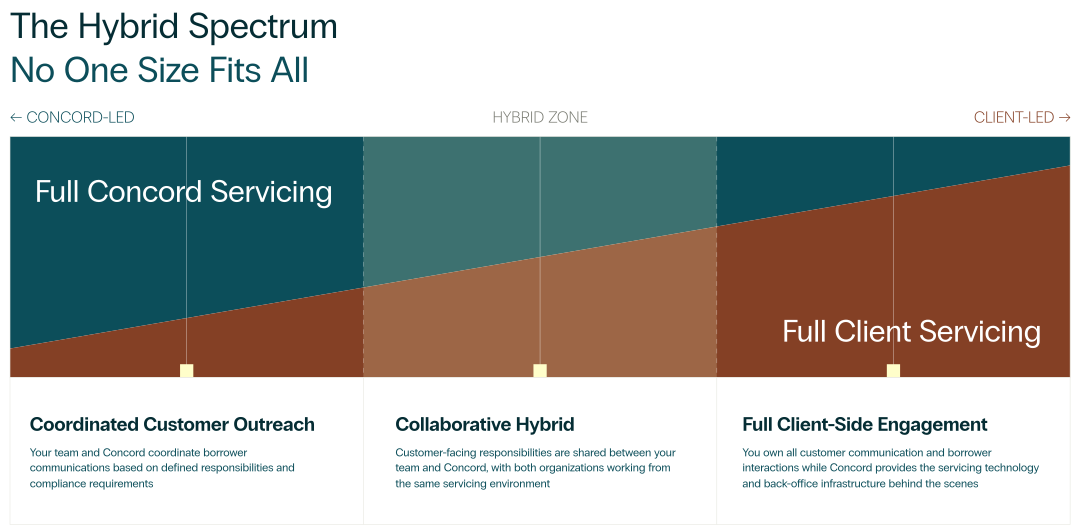
Every lender's servicing strategy is different. Some prioritize maintaining direct control over the customer experience, while others look for support managing the technology and servicing functions that keep a portfolio running efficiently.
Concord's hybrid servicing model changes the conversation around outsourcing. Rather than defining servicing as an internal function or an outsourced operation, lenders can determine which responsibilities they want to manage directly and where specialized support can strengthen their operations.
If you're evaluating your servicing strategy, hybrid servicing offers an opportunity to rethink the traditional all-or-nothing approach. Sometimes the best servicing strategy isn't choosing one model over another. It's building the right combination of both.
Learn more about Concord's servicing solutions or connect with our team to discuss the right servicing model for your organization.
{{cms-button-hs}}

Peter Moody, Chief Revenue Officer at Concord, works with specialty finance organizations on the operational and strategic considerations involved in building and scaling their businesses. He brings a practical perspective on how servicing and technology can support growth and evolving business needs.
4343 N. Scottsdale Rd., Ste. 270
Scottsdale, AZ 85251
NMLS ID 365917

